
Does TMS Treatment in Las Vegas Hurt
- Home
- Does TMS Treatment in Las Vegas Hurt
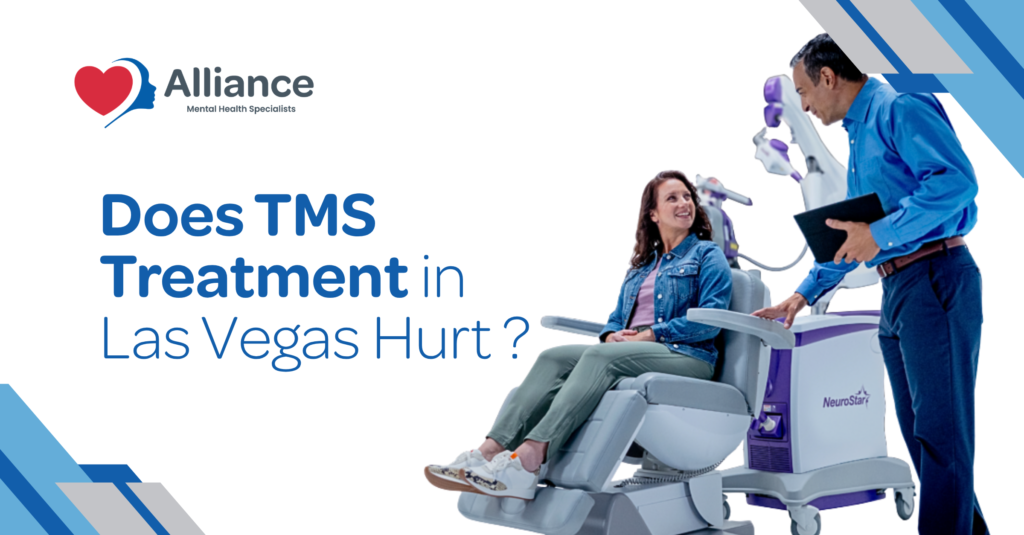
TMS treatment in Las Vegas is often recommended for adults with major depressive disorder who have not experienced sufficient improvement with antidepressant medication. One of the first questions patients ask is simple and direct: does it hurt? That concern is reasonable. Depression already carries physical fatigue, cognitive slowing, and emotional strain. Fear of discomfort should not prevent someone from considering a medically appropriate treatment option.
Alliance Mental Health Specialists incorporate neuromodulation within a structured psychiatric model. TMS is not offered as a cosmetic add-on or wellness procedure. Diagnostic clarification, prior treatment review, and individualized calibration guide every case. That level of oversight directly influences both safety and comfort.
Understanding what actually happens during the first session makes the experience far less intimidating.
TMS Is Noninvasive and Does Not Require Sedation
Transcranial Magnetic Stimulation uses focused magnetic pulses to stimulate specific regions of the brain involved in mood regulation. A magnetic coil is positioned gently against the scalp, most commonly over the left prefrontal cortex. Magnetic energy passes through the skull and activates targeted neurons without surgery, implanted devices, or systemic medication.
Patients remain awake throughout the procedure. Anesthesia is not required. Memory impairment does not occur. Driving and normal daily activities may resume immediately after treatment.
Comparison to electroconvulsive therapy is common but inaccurate. TMS does not involve electrical current passing across the brain, and when administered according to established safety guidelines, it does not induce seizures.
1. You Will Feel a Tapping Sensation
Most individuals describe the physical sensation as rhythmic tapping or light knocking on the scalp. Magnetic pulses stimulate superficial nerves and small facial muscles near the treatment site, which creates that perception.
The first session may feel unfamiliar. Mild scalp sensitivity can occur early in treatment. Adaptation typically develops within several visits. Intensity levels are individualized using motor threshold testing performed during the initial appointment. If stimulation feels sharper than expected, adjustments can be made immediately.
Significant pain is uncommon when treatment is properly calibrated. The goal is therapeutic stimulation, not discomfort.
2. You Will Hear Repetitive Clicking Sounds
Each magnetic pulse produces a clicking sound. Ear protection is provided to reduce acoustic intensity. The rhythm becomes predictable once the session begins.
Treatment typically lasts between 20 and 40 minutes depending on protocol selection. Patients remain seated comfortably and may relax quietly during stimulation.
Predictability helps reduce anticipatory anxiety. Once patients understand the cadence of the pulses, the experience tends to feel structured rather than stressful.
3. The First Session Focuses on Motor Threshold Mapping
Precision determines tolerability. During the first appointment, controlled pulses are delivered to determine the motor threshold — the minimum intensity required to produce a small hand movement. That measurement guides dosing for the entire treatment course.
Finger twitching during mapping is temporary and expected. Coil positioning is adjusted carefully to ensure accurate targeting of the treatment area.
Dr. Franklin Suba explains the process in practical terms:
“Most patients are surprised by how tolerable it feels. The tapping sensation can be a little uncomfortable at first, but we adjust the intensity based on your individual response. Once we determine your motor threshold, treatment is usually very manageable.”
Individualized calibration is central to responsible TMS behavioral health care. Standardized settings without proper measurement increase unnecessary discomfort and reduce precision.
4. Side Effects Are Typically Mild and Short-Lived
Most patients tolerate TMS without significant complications. Reported side effects generally include:
- Mild scalp tenderness
- Temporary headache
- Brief facial muscle twitching during pulses
Headaches, if they occur, often resolve within several hours and tend to decrease after early sessions. Over-the-counter pain relievers may be appropriate when approved by the supervising physician.
Systemic side effects commonly associated with antidepressants — such as weight gain, sedation, gastrointestinal upset, or sexual dysfunction — do not occur because no medication enters the bloodstream.
A qualified TMS doctor evaluates seizure history, implanted metallic devices near the head, and other neurological considerations before treatment begins. Careful screening keeps risk extremely low when protocols are followed appropriately.
Many individuals seeking depression therapy Las Vegas options value the absence of systemic medication effects.
5. Clinical Improvement Develops Gradually
TMS is not designed to produce dramatic change after a single session. Depression therapy Las Vegas patients receive through neuromodulation typically involves multiple sessions per week over several weeks.
Neurobiological change develops cumulatively. Repeated stimulation influences activity within mood-regulating neural circuits. Early improvements may include better sleep, improved focus, or modest increases in energy. More substantial mood shifts often follow consistent treatment.
Patients familiar with TMS treatment in Reno may recognize similar structured protocols across regulated psychiatric programs. The underlying principle remains the same: consistent stimulation over time promotes measurable change in targeted brain regions.
Ongoing assessment allows adjustments when clinically indicated. Medication management may continue alongside TMS depending on individual treatment planning.
Who May Not Be a Candidate for TMS
Although widely tolerated, TMS is not appropriate for every patient. Individuals with certain implanted metallic devices in or near the head may not qualify due to interaction with magnetic fields. Examples include cochlear implants, aneurysm clips, deep brain stimulators, or retained metallic fragments.
Patients with uncontrolled seizure disorders require careful evaluation. A history of seizures does not automatically exclude treatment, but active instability increases risk and must be assessed individually.
Recent brain injury, unstable neurological conditions, or certain medical complexities may require additional review. Pregnancy is not an absolute contraindication but warrants discussion regarding risks and benefits.
Diagnostic accuracy is essential. TMS is FDA-cleared for treatment-resistant major depressive disorder in adults. Comprehensive psychiatric evaluation determines whether neuromodulation aligns with a patient’s diagnosis, treatment history, and current symptom severity.
Alliance Mental Health Specialists conducts that evaluation before initiating treatment to ensure medical appropriateness.
TMS Is Evidence-Based and FDA-Cleared
Questions occasionally arise about whether TMS qualifies as legitimate medical treatment. That concern is understandable given inconsistent marketing across the industry.
TMS is FDA-cleared for adults with major depressive disorder who have not responded adequately to antidepressant therapy. Peer-reviewed clinical trials and long-term outcome studies support its safety and effectiveness when administered under psychiatric supervision. Academic medical centers incorporate TMS into formal treatment algorithms.
Delivery model matters. Structured medical oversight distinguishes evidence-based neuromodulation from loosely supervised alternatives.
Frequently Asked Questions
Does TMS treatment in Las Vegas hurt during every session?
Most patients report tapping or pressure rather than significant pain. Sensitivity often decreases after early sessions as the scalp adapts. Intensity can be adjusted if needed.
Is TMS legitimate medical treatment?
Yes. TMS is FDA-cleared for treatment-resistant major depressive disorder. Clinical research supports its use when delivered under psychiatric supervision.
How long does a full treatment course last?
Standard protocols often involve five sessions per week for four to six weeks. Duration varies depending on clinical response and individualized planning.
Can TMS replace antidepressant medication?
Some patients continue medication during treatment. Others may reduce medication under medical supervision after improvement. Decisions are individualized.
Who determines candidacy?
A TMS doctor conducts psychiatric evaluation, reviews prior treatment trials, and screens for contraindications before recommending therapy.
When Medication Is Not Enough
Persistent depressive symptoms after appropriate medication trials warrant reassessment. Treatment resistance is not a personal failure. It is clinical information indicating that a different therapeutic mechanism may be necessary.
If depression remains resistant to prior treatment, schedule a psychiatric consultation to determine whether TMS treatment in Las Vegas is clinically appropriate for your diagnosis and treatment history.
Recent Posts
Recent Comments
No comments to show.
Categories
Related Posts
April 23, 2026
April 21, 2026