
Helping Your Child’s Mental Health After Cyberbullying
- Home
- Helping Your Child’s Mental Health After Cyberbullying
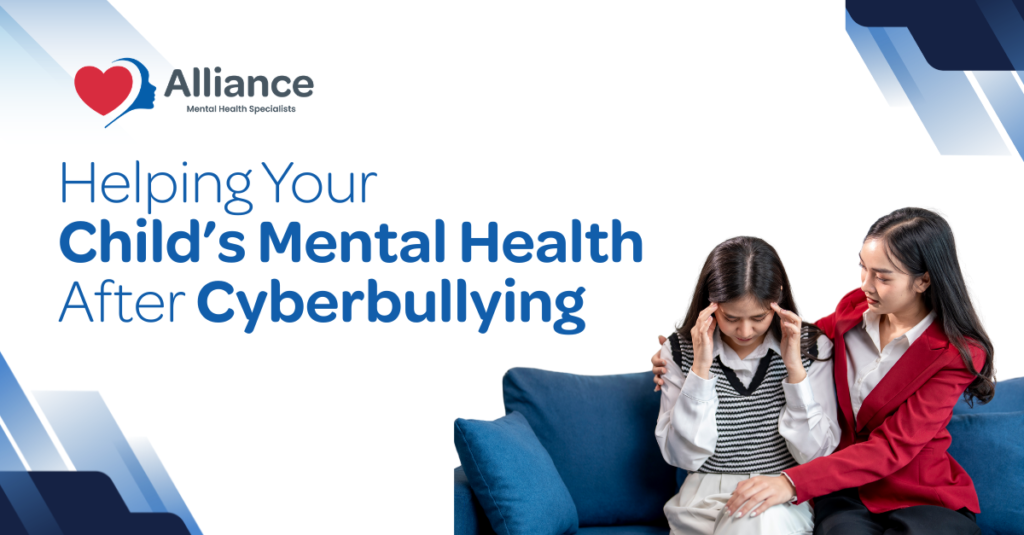
Most parents recognize cyberbullying only after their child’s mood, confidence, or behavior begins to change, which is why Alliance Mental Health Specialists is often sought at that moment of concern.
That realization rarely arrives with clarity. Parents notice shorter answers at dinner, heavier school mornings, or a child who seems present but emotionally distant. A phone may suddenly feel charged with tension instead of connection. These changes are unsettling because they do not point neatly to a single cause, leaving parents questioning whether they are overreacting, missing something, or responding too slowly.
Cyberbullying does not end emotionally when messages stop. Emotional fallout often lingers through disrupted sleep, irritability, withdrawal, or sudden shifts in self-esteem. Parents usually do not need reminders that cyberbullying is harmful. Parents need practical direction on what actually helps after the harm has already occurred.
What Parents Should Do First
The first response sets the tone for recovery. Children watch closely for cues about whether they are safe, believed, and supported.
Start by slowing the situation down. Calm adult regulation reduces fear and lowers the pressure that keeps children silent. Immediate problem-solving often feels helpful but can unintentionally shut communication down.
Three early actions make a meaningful difference:
- Create emotional safety. Let your child speak without interruption or correction.
- Remove blame clearly. Say, more than once, that the bullying is not their fault.
- Pause major decisions. Sudden changes to school, devices, or routines often increase anxiety rather than relieve it.
These steps help keep the door open for ongoing conversation.
Why Cyberbullying Affects Mental Health So Deeply
Cyberbullying removes boundaries that normally allow emotional recovery. Online harassment can follow children into private spaces, appear late at night, and resurface through screenshots or reposts long after the original message disappears.
Children and adolescents rely heavily on peer feedback while forming identity. Online cruelty undermines self-worth and disrupts emotional regulation. Humiliation feels public and permanent, even when adults know it is not.
Stress often shows up indirectly. Sleep disruption, irritability, and withdrawal commonly appear before a child can clearly articulate what feels wrong.
Early Emotional and Behavioral Shifts Parents Often Miss
Mental health changes usually develop gradually rather than all at once.
Emotional shifts may include irritability, sadness, or emotional flatness. Children may seem unusually sensitive to comments or criticism.
Behavioral changes often follow. School avoidance, loss of interest in activities, or withdrawal from friends can signal distress. Phone behavior may shift as well, either through avoidance or constant checking.
Physical symptoms sometimes accompany emotional strain. Headaches, stomach discomfort, and fatigue often reflect stress rather than illness.
These patterns commonly overlap with teen anxiety, especially when children feel watched, judged, or socially unsafe.
What Not to Do When Cyberbullying Comes to Light
Protective instincts can backfire when fear drives the response.
Interrogating for details often overwhelms children. Confiscating devices without explanation increases secrecy. Confronting other families impulsively can escalate conflict rather than resolve it.
Responses that frequently make things worse include:
- Long lectures that feel like blame
- Minimizing comments such as “just ignore it”
- Public posting or messaging in anger
- Promising outcomes that cannot be controlled
Calm, steady responses preserve trust and emotional safety.
What Helps During the First Two Weeks
Recovery begins with consistency rather than intensity.
Short, frequent check-ins usually work better than long conversations. Silence often invites honesty more effectively than repeated questioning.
Parents often find grounding language helpful:
- “I’m glad you told me.”
- “You’re not in trouble.”
- “We’ll take this one step at a time.”
Technology boundaries should feel protective rather than punitive. Temporary adjustments work best when discussed together, such as limiting notifications at night, reviewing privacy settings, or creating device-free recovery time after school.
How to Involve School Without Making Things Worse
School involvement can be helpful when handled thoughtfully.
Preparation matters. Save screenshots, usernames, dates, and platform details. Write a brief timeline and document changes you are seeing at home.
Requests that often lead to meaningful support include:
- Monitoring during specific times or locations
- Access to school counseling check-ins
- A clear plan for what your child should do if harassment occurs at school
- Defined communication points for follow-up
Framing concerns around safety and support tends to produce better outcomes than focusing on punishment.
When Distress Is No Longer Settling
Some emotional reactions improve once support is in place. Others persist or intensify.
Pay attention to duration, intensity, and daily functioning.
Ongoing withdrawal, emotional numbness, or loss of motivation lasting several weeks may indicate adolescent depression, particularly when hopeless or self-critical language appears.
Any signs of adolescent self harm require immediate attention. Unexplained injuries, fixation on death, or emotional detachment should never be delayed or minimized.
Professional evaluation provides clarity and helps reduce long-term risk.
What Professional Mental Health Support Looks Like
Mental health care does not mean something has gone terribly wrong. Support often prevents distress from becoming more severe.
Care focuses on emotional regulation, stress response patterns, coping skills, and environmental pressures. Family involvement strengthens outcomes because children recover faster when support remains consistent at home.
Services provided through alliance psychiatry emphasize understanding how stress interacts with development rather than assigning blame.
Rebuilding Confidence After Cyberbullying
Stopping bullying is not the same thing as rebuilding confidence.
Confidence returns through predictable routines, safe autonomy, and opportunities to experience competence away from peer judgment. Offline activities that foster skill and connection often play a key role in recovery.
Progress rarely looks linear. Setbacks do not mean failure. Consistency matters more than speed.
Parents Carry Emotional Weight Too
Parents often carry guilt, anger, and fear quietly. These reactions are understandable.
Perfection is not required. Repair matters more than timing. Children benefit from steady presence rather than flawless responses.
Support systems help parents remain regulated and emotionally available during stressful periods.
When Additional Support Becomes Appropriate
Some families need more structure than home strategies alone can provide. Professional guidance becomes especially valuable when symptoms persist, when school becomes a battleground, or when parents feel stuck between “too much” and “not enough.”
Families seeking mental health Las Vegas Nevada services often reach this point not because cyberbullying happened, but because recovery has stalled despite consistent effort at home.
Local care can reduce the burden of managing everything alone by clarifying next steps and coordinating support.
What Coordinated Care Can Provide
A structured plan reduces guesswork and emotional exhaustion.
Support through alliance clinical services may include assessment, therapy, parent guidance, and coordination with school resources when needed. Clear direction helps families move out of crisis mode and into recovery.
A Clear Next Step for Families
Cyberbullying often leaves parents uncertain about timing, response, and next steps. That uncertainty alone can add to emotional strain at home.
Families who want clarity can schedule a consultation with Alliance Mental Health Specialists to discuss what has changed, what has improved, and what still feels unstable. A clinical conversation helps parents understand whether support should focus on emotional regulation, coping skills, school coordination, or additional safety planning.
Parents do not need to wait until things feel unmanageable. Early consultation provides guidance, context, and next steps tailored to a child’s specific situation, allowing families to move forward with greater confidence and support.
Recent Posts
- Helping Your Child’s Mental Health After Cyberbullying
- 5 Signs Your Anxiety Medication Might Need an Adjustment
- Spravato vs. Traditional Antidepressants: What’s the Difference?
- High-Functioning Anxiety: Why Doing “Well” Doesn’t Mean You’re Okay
- Why Specialized Care Matters When Choosing a Psychiatrist in Las Vegas
Recent Comments
No comments to show.
Categories
Related Posts
February 27, 2026
February 25, 2026
5 Signs Your Anxiety Medication Might Need an Adjustment
February 22, 2026