
Spravato vs. Traditional Antidepressants: What’s the Difference?
- Home
- Spravato vs. Traditional Antidepressants: What’s the Difference?
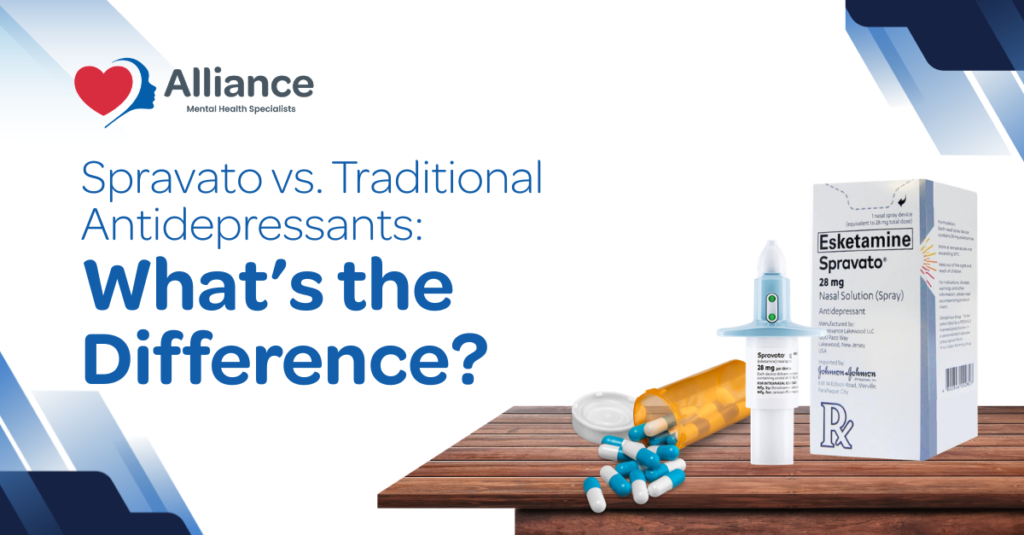
Spravato represents a newer treatment option for adults with treatment-resistant depression, offering a fundamentally different approach compared to traditional antidepressant medications. While standard antidepressants remain the first-line treatment for most individuals with depression, not every patient experiences meaningful symptom relief. A clear, side-by-side comparison helps explain when each option is used, how they differ biologically, and what patients can realistically expect from treatment.
Role in Depression Treatment
Traditional Antidepressants
Traditional antidepressants are typically prescribed as the initial pharmacologic treatment for major depressive disorder. Clinical guidelines support their early use due to well-established safety profiles, long-term data, and broad effectiveness across a wide range of patients.
Medication management for depression often begins with an oral antidepressant alongside psychotherapy. Providers may adjust dosage, switch medications, or add adjunctive treatments over time based on symptom response and tolerability. Many patients achieve remission through this process without requiring advanced interventions.
Spravato
Spravato is approved specifically for adults with treatment-resistant depression, defined as depression that has not responded adequately to at least two different antidepressant medications taken at appropriate doses and durations. Clinical positioning places Spravato later in the treatment pathway rather than as an initial option.
This distinction explains why Spravato supplements—rather than replaces—traditional antidepressant therapy.
Mechanism of Action
Traditional Antidepressants
Most antidepressants act on monoamine neurotransmitters such as serotonin, norepinephrine, and dopamine. These chemicals influence mood, motivation, and emotional regulation. Symptom improvement develops gradually as neurochemical balance stabilizes and downstream adaptive changes occur within the brain.
Delayed onset remains a common feature of monoamine-based antidepressants, which explains why treatment response is typically evaluated over several weeks.
Spravato
Spravato contains esketamine, which targets the glutamate system rather than monoamine pathways. Glutamate is the brain’s primary excitatory neurotransmitter and plays a central role in synaptic plasticity and neural connectivity. Esketamine therapy modulates NMDA receptors, triggering downstream effects that differ significantly from traditional antidepressants.
This neurobiological difference contributes to Spravato’s faster onset of action in some patients.
Speed and Pattern of Symptom Response
Traditional Antidepressants
Most patients experience gradual improvement over four to eight weeks. Partial response is common, prompting medication adjustments during ongoing medication management for depression. Full remission may take several months, particularly when symptoms are longstanding.
Spravato
Clinical studies demonstrate that some patients experience symptom improvement within days of starting Spravato. Rapid response does not guarantee sustained remission, which is why maintenance dosing and concurrent antidepressant therapy remain essential components of care.
Faster symptom relief may be clinically meaningful for patients with severe functional impairment.
Administration and Treatment Setting
Traditional Antidepressants
- Oral medications taken daily
- Administered at home
- Periodic psychiatric follow-up
This approach offers convenience and flexibility but relies heavily on adherence and accurate symptom reporting.
Spravato
- Nasal spray administered in a certified medical facility
- Required post-dose monitoring
- Fixed dosing schedule
Esketamine therapy must be provided under direct clinical supervision. Federal Risk Evaluation and Mitigation Strategy (REMS) requirements govern how Spravato is prescribed and administered, emphasizing patient safety.
Mental health clinics offering Spravato operate under these structured regulations.
Safety and Monitoring
Traditional Antidepressants
Common side effects include gastrointestinal discomfort, sleep changes, sexual side effects, or weight fluctuations. Long-term safety data supports extended use under medical supervision. Monitoring focuses on symptom response, side effects, and adherence.
Spravato
Short-term effects may include dissociation, dizziness, sedation, or transient increases in blood pressure. Clinical observation ensures these effects resolve before patients leave the facility. Monitoring requirements reflect safety considerations rather than increased risk relative to untreated depression.
How Clinicians Decide Between Continuing Antidepressants and Escalating Care
Psychiatric decision-making does not rely solely on symptom severity. Providers evaluate duration of illness, functional impairment, consistency of medication adherence, and response patterns across multiple treatments. Persistent symptoms despite optimized dosing and adequate duration often signal the need to reassess the treatment strategy.
Traditional antidepressants may remain appropriate when partial response exists or when side effects limit escalation. Spravato becomes a consideration when depressive symptoms continue to interfere with daily functioning despite structured medication management for depression. Clinical judgment balances potential benefit, safety considerations, and the patient’s ability to commit to in-clinic treatment.
This escalation framework ensures that advanced therapies are introduced deliberately rather than prematurely.
Patient Eligibility and Assessment
Traditional Antidepressants
Most adults diagnosed with depression qualify for oral antidepressants unless contraindications exist. Providers select medications based on symptom profile, medical history, and prior treatment response.
Spravato
Eligibility criteria are more selective. Providers assess:
- Documented treatment-resistant depression
- Prior antidepressant trials
- Medical and psychiatric history
- Ability to attend regular clinic visits
Clinicians at Alliance Psychiatry commonly perform comprehensive evaluations before recommending Spravato to ensure alignment with FDA indications and patient safety.
Integration Into Ongoing Mental Health Care
Traditional Antidepressants
Medication functions as one part of a broader care plan. Psychotherapy, behavioral strategies, and lifestyle interventions often improve outcomes. Ongoing medication management for depression allows treatment to adapt as symptoms evolve.
Spravato
Spravato is approved only as an adjunct to an oral antidepressant. Treatment plans emphasize continuity rather than substitution. Clinics delivering care through Alliance Mental Health Services frequently integrate esketamine therapy with counseling and long-term psychiatric follow-up.
This coordinated model addresses both biological and psychosocial contributors to depression.
Practical Considerations
Traditional Antidepressants
- Broad insurance coverage
- Lower time commitment
- Minimal disruption to daily routines
Accessibility supports continued use as first-line therapy.
Spravato
- Multiple weekly clinic visits during induction
- Time commitment for monitored sessions
- Prior authorization often required
Patients receiving care through a mental health clinic Las Vegas providers operate must consider scheduling and transportation when evaluating Spravato.
Long-Term Treatment Expectations
Traditional Antidepressants
Many patients maintain stability with long-term use. Others require periodic medication changes or combination strategies. Treatment duration depends on symptom recurrence risk and clinical history.
Spravato
Spravato treatment includes an induction phase followed by maintenance dosing at reduced frequency. Long-term outcomes depend on sustained engagement with comprehensive mental health services rather than medication alone.
Side-by-Side Comparison Summary
| Aspect | Traditional Antidepressants | Spravato |
|---|---|---|
|
Treatment Line |
First-line |
Advanced |
|
Mechanism |
Monoamines |
Glutamate |
|
Onset |
Weeks |
Days for some |
|
Administration |
Home dosing |
In-clinic |
|
Monitoring |
Periodic |
Mandatory |
|
Indication |
Broad depression |
Treatment-resistant depression
|
Choosing the Appropriate Treatment
Treatment decisions depend on symptom severity, prior response, and individual circumstances. Psychiatric providers guide patients through available options using evidence-based criteria and ongoing assessment. No single treatment fits every patient, which makes personalized care essential.
Next Steps for Patients Seeking Advanced Care
Depression treatment is not one-size-fits-all. Patients who have not improved with standard antidepressants often benefit from a structured review of prior medications, symptom patterns, and treatment response. Alliance Mental Health Services offers clinician-led consultations designed to determine whether continued medication management or advanced options such as Spravato are clinically appropriate. Care decisions focus on safety, evidence, and long-term stability rather than short-term symptom changes.
Recent Posts
Recent Comments
No comments to show.
Categories
Related Posts
April 23, 2026
April 21, 2026